
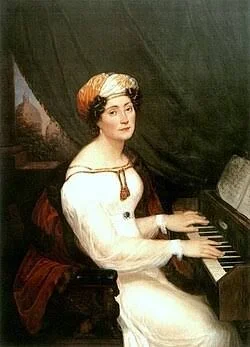
Maria Szymanowska (1789-1831)
Nocturne in Bb Major
Maria Szymanowska was born in Warsaw, Poland in 1789. She was one of the earliest virtuoso pianists who travelled around much of Europe to perform. She never received formal training in composition, as this was considered unbecoming for a woman. Despite this, Szymanowska was a prolific composer of piano music, and the nocturne in Bb is reputed as her most mature work.
The Nocturne and the New Piano
The Nocturne is a style of piano piece that usually has a soaring melody in the right hand, while the left hand accompanies. As the title may suggest, the melodies are often emotive to evoke feelings of the night. Szymanowska was among the first generation to write music for the piano as we know it today. Before the 18th century, the piano was generally much quieter and the notes didn’t sustain as long. Because of that, she helped develop a new style of piano music specific for this new instrument. One young composer in particular was listening to Szymanowska’s new style…
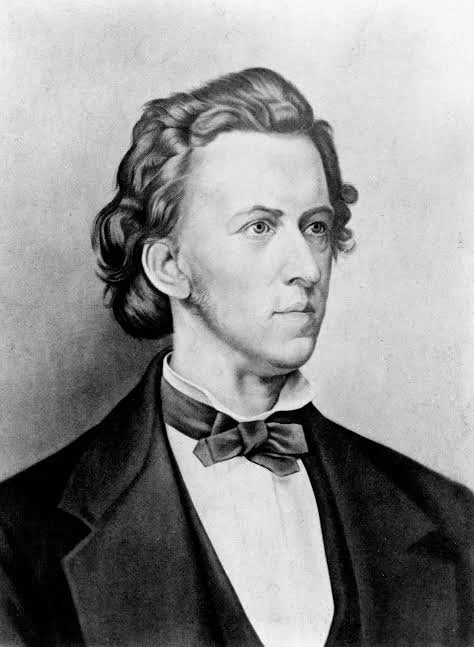
Frédéric Chopin (1810-1849)
Mazurkas, Op. 7
Frederic Chopin may be the most beloved composer who ever wrote for the piano. Chopin composed almost exclusively for the piano, and created some of the most enchanting melodies. Chopin grew up in Warsaw, Poland, while Szymanowska was at the peak of her career. Although it is still unknown whether the two composers met, it is beyond doubt that Chopin knew some of Szymnowska’s music. To what degree he was influenced by her is still debated.
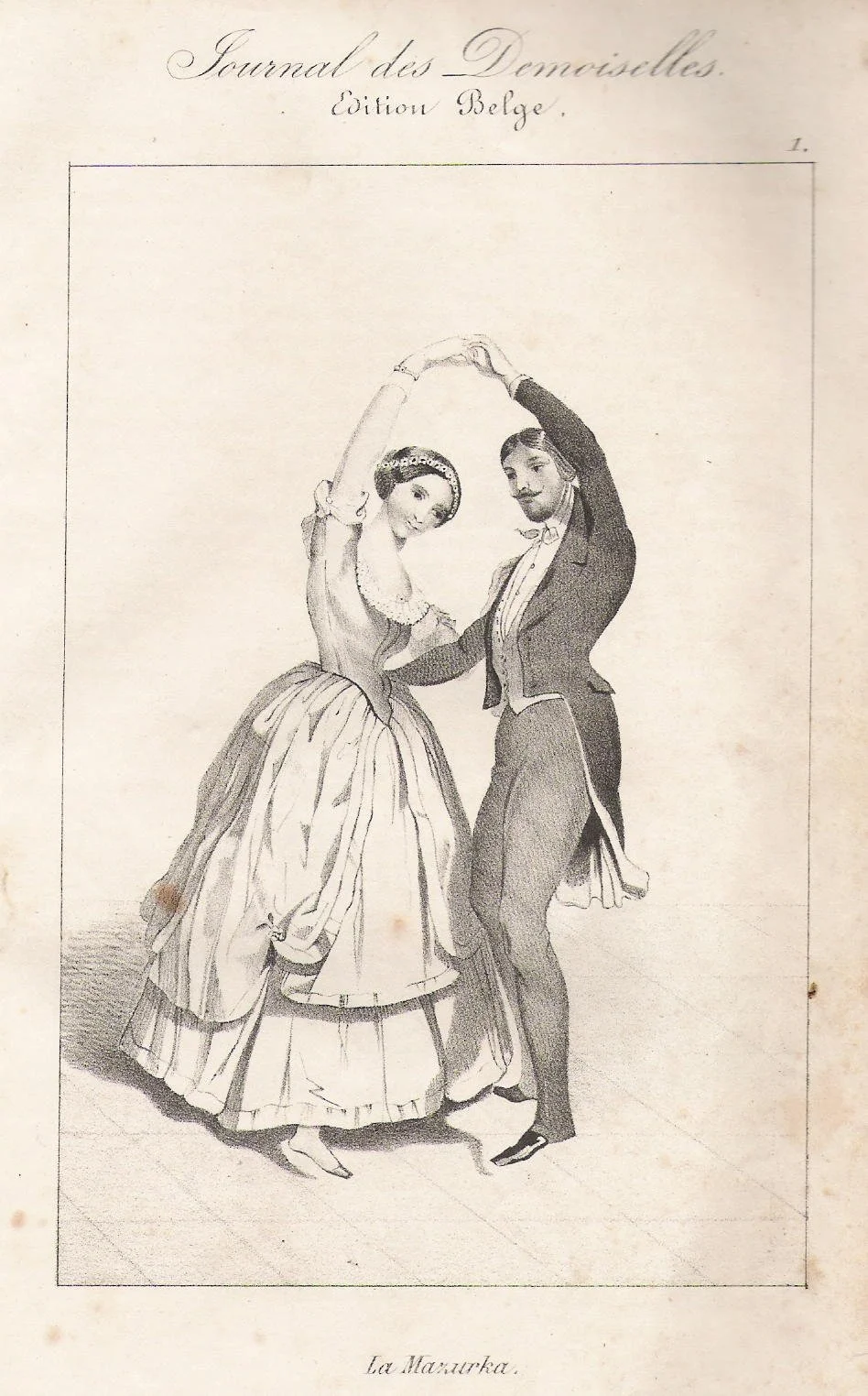
The Mazurka
Imagine it’s the 1800’s, you don’t have a radio or a CD player, or a TV. All your friends come over for a party and what do you do? You dance, of course! Someone sits down at the piano and starts playing some dancing music, and everyone dances together in groups of four. In much of Europe, most people were dancing Waltzes, but in Poland, Mazurkas were more popular. Both Szymanowska and Chopin wrote many Mazurkas for the piano. Chopin’s Mazurka’s all are short, but contain lots of different characters and emotions: some are celebratory and joyful, while others are mournful and introspective. The last Mazurka in this set is especially silly: Chopin wrote “senza fine” at the end of the piece, meaning the song is never supposed to end!
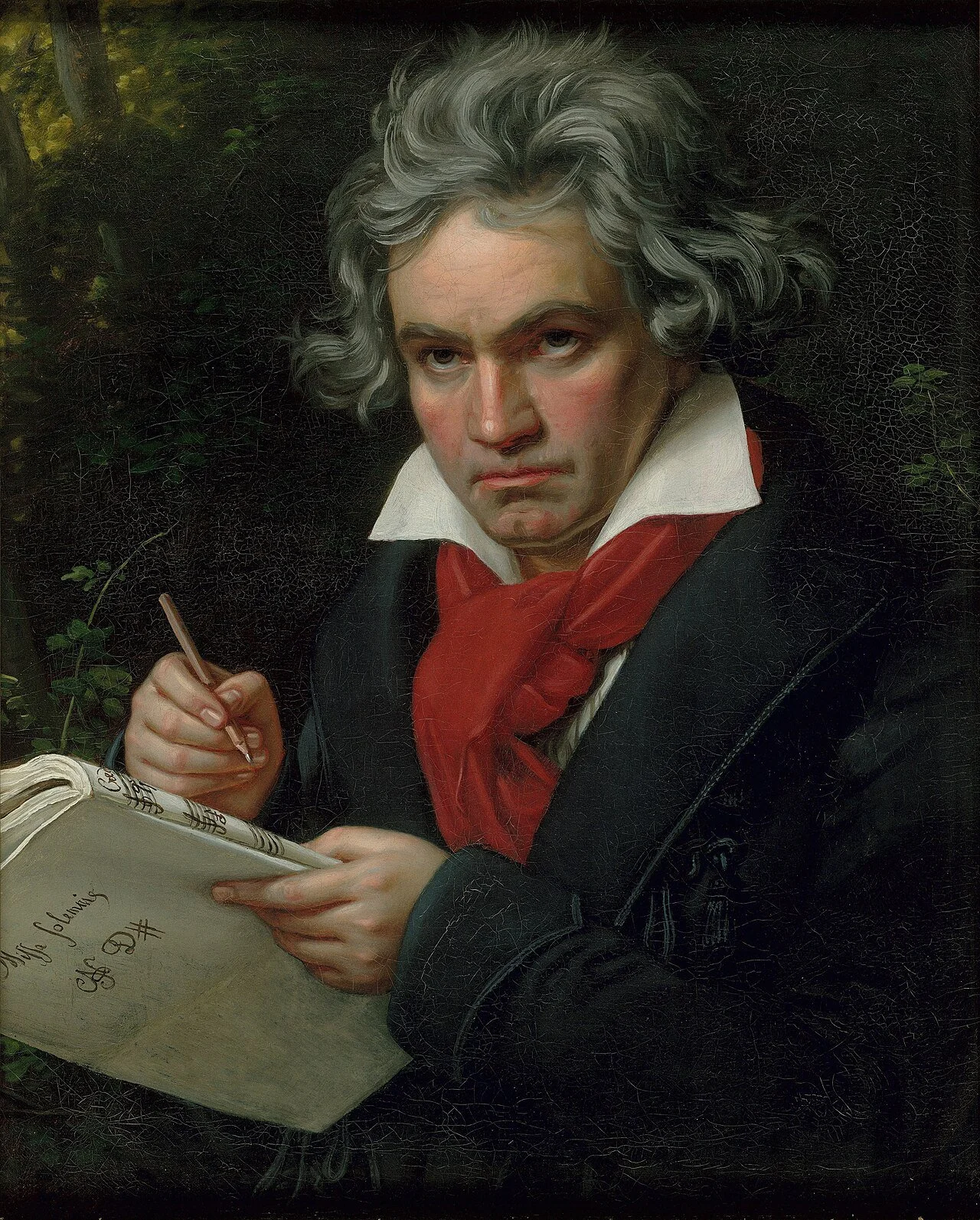
Ludwig Von Beethoven (1770-1827)
Sonata in F Major, Op. 7 no. 1
Beethoven…
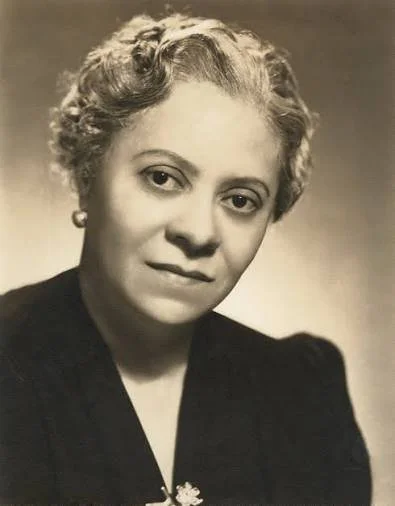
Florence Price (1887-1983)
Beethoven…
The Mazurka
Imagine it’s the 1800’s, you don’t have a radio or a CD player, or a TV. All your friends come over for a party and what do you do? You dance, of course! Someone sits down at the piano and starts playing some dancing music, and everyone dances together in groups of four. In much of Europe, most people were dancing Waltzes, but in Poland, Mazurkas were more popular. Both Szymanowska and Chopin wrote many Mazurkas for the piano. Chopin’s Mazurka’s all are short, but contain lots of different characters and emotions: some are celebratory and joyful, while others are mournful and introspective. The last Mazurka in this set is especially silly: Chopin wrote “senza fine” at the end of the piece, meaning the song is never supposed to end!
My Approach
What began as a passion project has evolved into something more. We’re proud of where we’ve been and even more excited for what’s ahead. What sets us apart isn’t just our process—it’s the intention behind it. We take time to understand, explore, and create with purpose at every turn.
Simple ideas
Through every step, we've focused on staying true to our values and making space for thoughtful, lasting work.
Lasting impact
We build with clarity, act with integrity, and always stay curious.